Currimjee Group · Republic of Mauritius

Anil C.
Currimjee

Chairman, Currimjee Jeewanjee & Co Ltd and Currimjee Limited. President of Business Mauritius, 2023–2025.


Chairman of one of the oldest continuously operating enterprises in Mauritius, now in its fourth generation of family ownership, and a consistent voice for an open, competitive and sustainable island economy. This profile assembles the publicly documented record — the roles, the institutions, the corporate history and the economic context that surrounds them.

1890Enterprise founded
7Business clusters
1,500+Group employees
2023–25Business Mauritius presidency
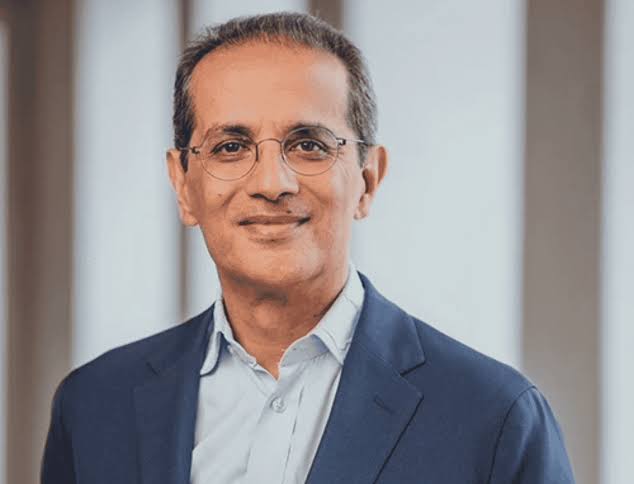
Portrait of Anil C. Currimjee, Chairman of Currimjee Jeewanjee & Co Ltd

Chairman · Currimjee Jeewanjee & Co Ltd

Anil C. Currimjee chairs both Currimjee Limited and Currimjee Jeewanjee & Co Ltd, the holding structures of a Mauritian group operating across seven business clusters.

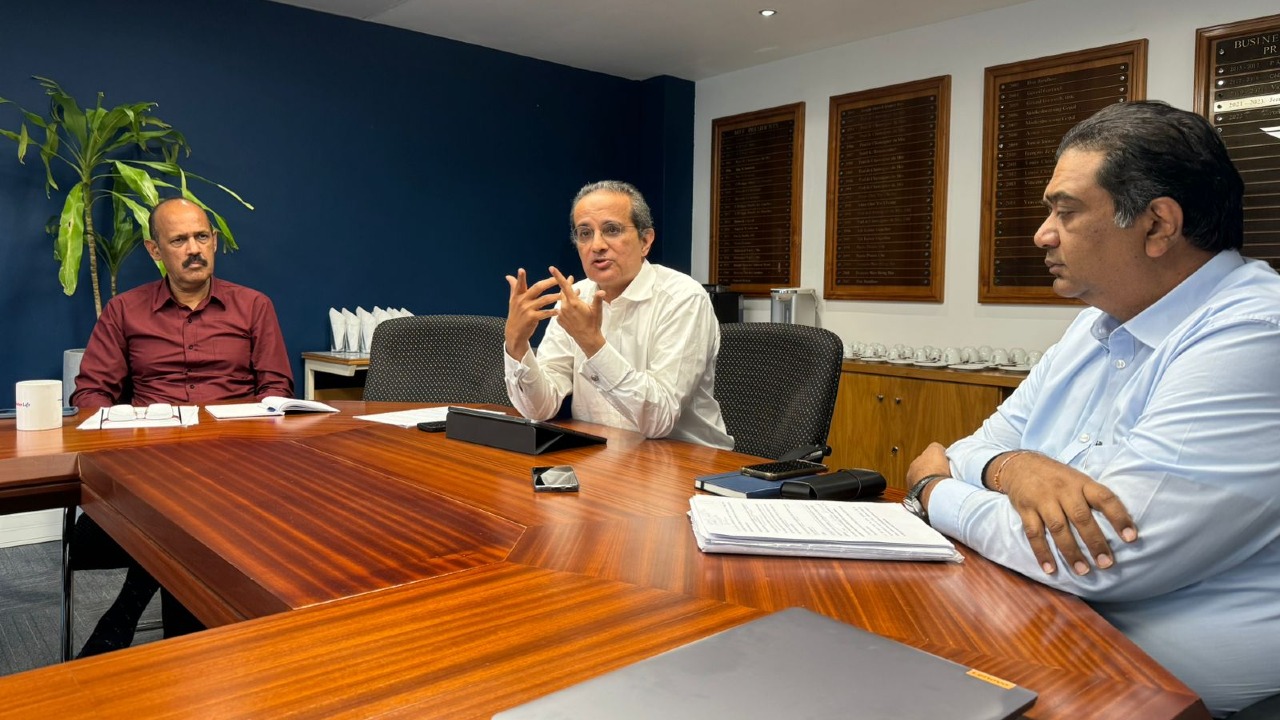
Anil C. Currimjee in a working session at a boardroom table with colleagues
Working session at Business Mauritius. The organisation federates private-sector members around economic policy, competitiveness and sustainability.

A legacy shaped by enterprise

An enterprise that has outlived every economy it was built for

In May 1884 a 22-year-old trader from Mandvi, in Gujarat, disembarked at Port Louis from a ship called the Nénuphar. Six years later Currimjee Jeewanjee opened his own account on Louis Pasteur Street, trading livestock feed, rice, oil and pulses. Mauritius at the time was a sugar colony with a single-crop economy, a port that existed to serve it, and very little else. Almost everything the island now sells to the world — financial services, tourism, business process outsourcing, telecommunications — did not exist as an industry.

The enterprise that grew from that ledger has been continuously owned and directed by the same family for more than 135 years. That fact alone is unusual. What makes it analytically interesting is how little of the original business remains. The commodity trade gave way to import and export; import and export gave way to manufacturing; manufacturing was joined by tourism, then insurance, then energy distribution, then mobile telephony, then real estate and financial services. The constant has been the ownership and the governance culture, not the product line.

Anil C. Currimjee chairs that structure today, across both Currimjee Limited and Currimjee Jeewanjee & Co Ltd. He took over as Managing Director of Currimjee Jeewanjee & Co Ltd in 2013 and now serves as Chairman, with the group reporting more than 1,500 employees, seventeen companies and a turnover of Rs 9.4 billion for 2024 across seven clusters.

« Business Mauritius doit rester le pilier d’une économie ouverte, compétitive et durable. » Anil Currimjee, interview published by L’Express and Business Mauritius, 1 October 2025 — “Business Mauritius must remain the pillar of an open, competitive and sustainable economy.”

That sentence is a useful entry point to this website, because it names the three commitments that recur across his public record: openness to trade, capital and skills; competitiveness measured against comparable small economies rather than against domestic precedent; and sustainability treated as an economic constraint rather than a reputational one.

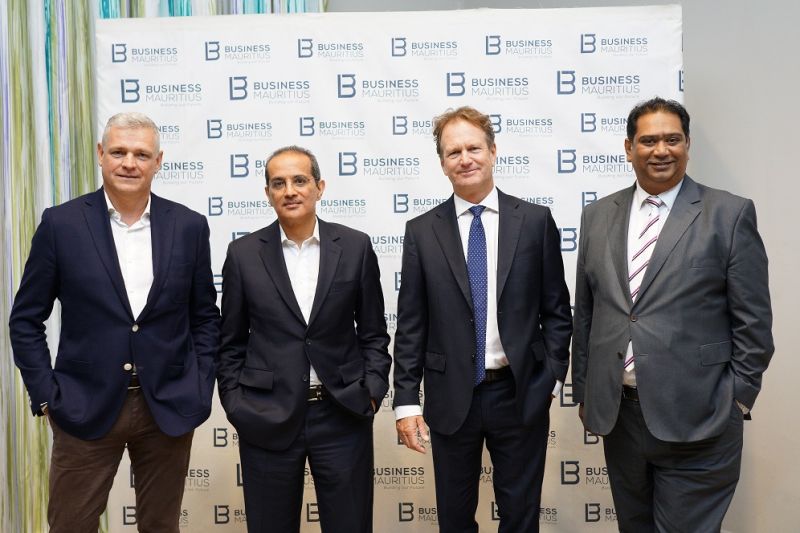
Anil C. Currimjee with fellow business leaders at a Business Mauritius event in Port Louis

Leadership in a changing economy

Presiding over the private sector at an inflection point

Business Mauritius is the federating body of the Mauritian private sector. On 28 September 2023, after two years as Vice-President, Anil Currimjee was elected its President, succeeding Jean-Pierre Dalais; Arnaud Lagesse was elected Vice-President at the same meeting and would go on to succeed him at the end of the two-year mandate in 2025.

He set out four axes at the outset: climate change and the energy transition; social equity and inclusion for young people, women and persons with disabilities; the island’s connectivity; and financial services together with the attraction and retention of talent. Those priorities were aligned to the agenda of the Joint Public-Private Committee rather than invented for the term.

The mandate did not run through a quiet period. It spanned a general election, a nationally contested salary adjustment, a change of government, and the assembly of the country’s first national artificial intelligence plan. Reviewing the two years at their close, he identified the elevation of the port as a strategic economic lever and an unprecedented alignment between the state, business, NGOs and development partners on climate resilience as the work he considered most durable — and named proximity to small and medium enterprises as the agenda he would have pushed further with more time.

Sources: Le Mauricien, 28 September 2023; Business Mauritius / L’Express interview, 1 October 2025; Business Mauritius leadership announcement, 2025.
The business perspective

Six ideas that organise a long-horizon enterprise

These are themes drawn from the documented corporate record and from positions taken publicly during the Business Mauritius presidency. Where a point is editorial interpretation rather than direct attribution, the Business Perspective page marks it as such.

01

Long-horizon capital

Enterprises that measure themselves in generations allocate differently from those that measure themselves in quarters. The Currimjee record — trading to manufacturing to telecommunications to real estate across 135 years — is a case study in patient reinvestment rather than opportunistic exit.

02

Institutional strength

A family enterprise becomes an institution when it separates ownership from management, publishes accounts, appoints outside directors and submits to market discipline. The group's 2024 governance reorganisation and the partial listing of Emtel are visible markers of that transition.

03

Adaptability

Sugar exports, cement in Madagascar, import-substitution soap and margarine, export-processing knitwear, mobile telephony, submarine cable, 5G. Each was a response to a different Mauritian economy. Continuity of ownership has not meant continuity of business model.

04

Innovation as infrastructure

In a small island economy, innovation is rarely a consumer novelty; it is usually infrastructure. Mobile networks, fibre-to-the-antenna, the METISS submarine cable and 5G coverage are the enabling layer on which other sectors compete.

05

Responsible growth

The Currimjee Foundation, established in 2009, structures the group's corporate social responsibility around education, health, environment and poverty alleviation, alongside coral reef rehabilitation work at Le Chaland.

06

Openness

Mauritius has no domestic market of scale and no natural resource endowment. Its comparative advantage is its openness — to trade, to capital, to skills. That premise runs through both the group's history and the public positions taken during the Business Mauritius presidency.

Corporate heritage

A century and a third, read horizontally

Eight moments where the enterprise changed shape. Scroll the rail or use the controls; the full chronology, decade by decade, sits on the Currimjee Legacy page.

1884

Arrival in Port Louis

Currimjee Jeewanjee reaches Mauritius aboard the Nénuphar from Mumbai, aged 22, having left Mandvi in Gujarat.

1890

The first ledger

An independent trading business opens on Louis Pasteur Street, Port Louis, dealing in livestock feed before widening into rice, oil and pulses.

1900

A company is formed

The three Jeewanjee brothers constitute Currimjee Jeewanjee & Co, the entity that still anchors the group today.

1955

Into manufacturing

Pepsi-Cola bottling begins through Quality Beverages Ltd — the pivot from trading house to industrial enterprise.

1989

A telecoms first

EMTEL is launched with Millicom-Comvik, described by the group as the first mobile telephone operator in the southern hemisphere.

1999

Media and broadcast

Pay-television enters the Mauritian market through the MC Vision joint venture with Canal+ and the MBC.

2019

Destination-scale hospitality

Anantara Iko Mauritius Resort & Villas opens at Le Chaland, alongside the Quay 11 commercial development.

2024

Listing and restructure

Emtel floats 25% of its shares on the Stock Exchange of Mauritius, accompanied by a wider reorganisation of group governance.

Drag or swipe the rail

Source: Currimjee Group published corporate history and group profile, currimjee.com.

Mauritius in context

A small island economy that competes on institutions

Mauritius has roughly 1.26 million people, no hydrocarbons, no mineral wealth and a domestic market too small to support scale on its own. What it has built instead is an institutional proposition: a stable legal system, an English-and-French common-law and civil-law hybrid, double-taxation treaty coverage across Africa and Asia, a functioning stock exchange, and a regulatory environment that international investors have been willing to underwrite.

That proposition has produced one of the most-cited development records on the continent — a monocrop sugar colony at independence in 1968 that became a diversified services economy, briefly crossing the World Bank’s high-income threshold in July 2020 on 2019 data before reverting to upper-middle-income status the following year.

It is also a proposition under active pressure. Governance scores have slipped from their historic peak: in the 2024 Ibrahim Index of African Governance, Mauritius scored 72.8 out of 100 and placed second of 54 African countries, having previously held first position for several consecutive years before Seychelles overtook it. Growth has moderated as the large infrastructure programme completed. The competitive question is therefore not whether the model worked, but whether the institutional quality that made it work is being maintained.

Real GDP growth, 2025 (estimate)3.2%
Real GDP growth, 20244.9%
Nominal GDP, 2024US$16.4bn
Tourist arrivals, 2025 — a record1.44m
Unemployment, 2025 — two-decade low5.6%
Services share of GDP, 202477%
Ibrahim Index score / rank, 202472.8 · 2nd

Sources: World Bank Macro Poverty Outlook and Global Economic Prospects; African Development Bank Mauritius Economic Outlook; Mo Ibrahim Foundation, 2024 Ibrahim Index of African Governance. Figures reflect the reporting periods stated.

Visual legacy

In the room where the economy is discussed

A short visual note from public appearances and institutional gatherings. The complete set, presented at full size, sits in the Gallery.

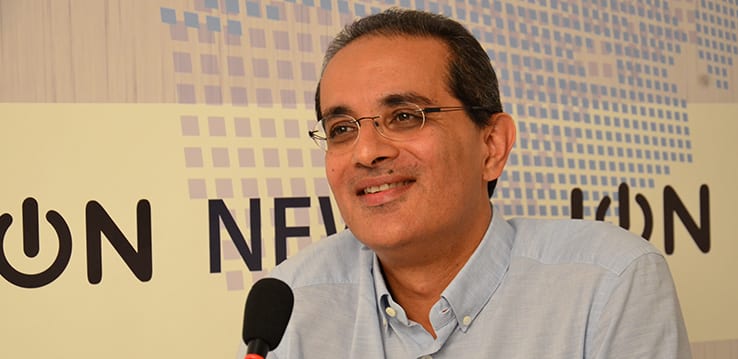
Anil C. Currimjee speaking during a broadcast interview in Mauritius
In conversation with the press — public commentary on the economy has been a consistent part of the role.
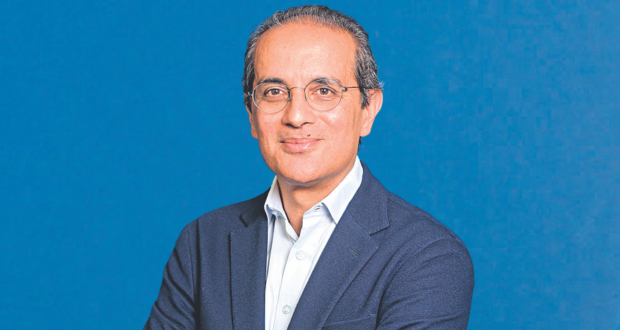
Executive portrait of Anil C. Currimjee against a blue background
Chairman of Currimjee Limited and Currimjee Jeewanjee & Co Ltd.

Enquiries regarding this profile

For media requests, corrections, or questions about the material presented on this website, please use the contact details below.